Problem
Capturing a tumbling, noncooperative object requires a chaser to rendezvous while the target motion and environmental dynamics remain uncertain. A controller must adapt without discarding the safety margins that make the approach robust.
Selected research
Adaptive control for orbital capture
Adaptive model predictive control for approaching tumbling objects in orbit, with explicit safety constraints that account for uncertain dynamics.
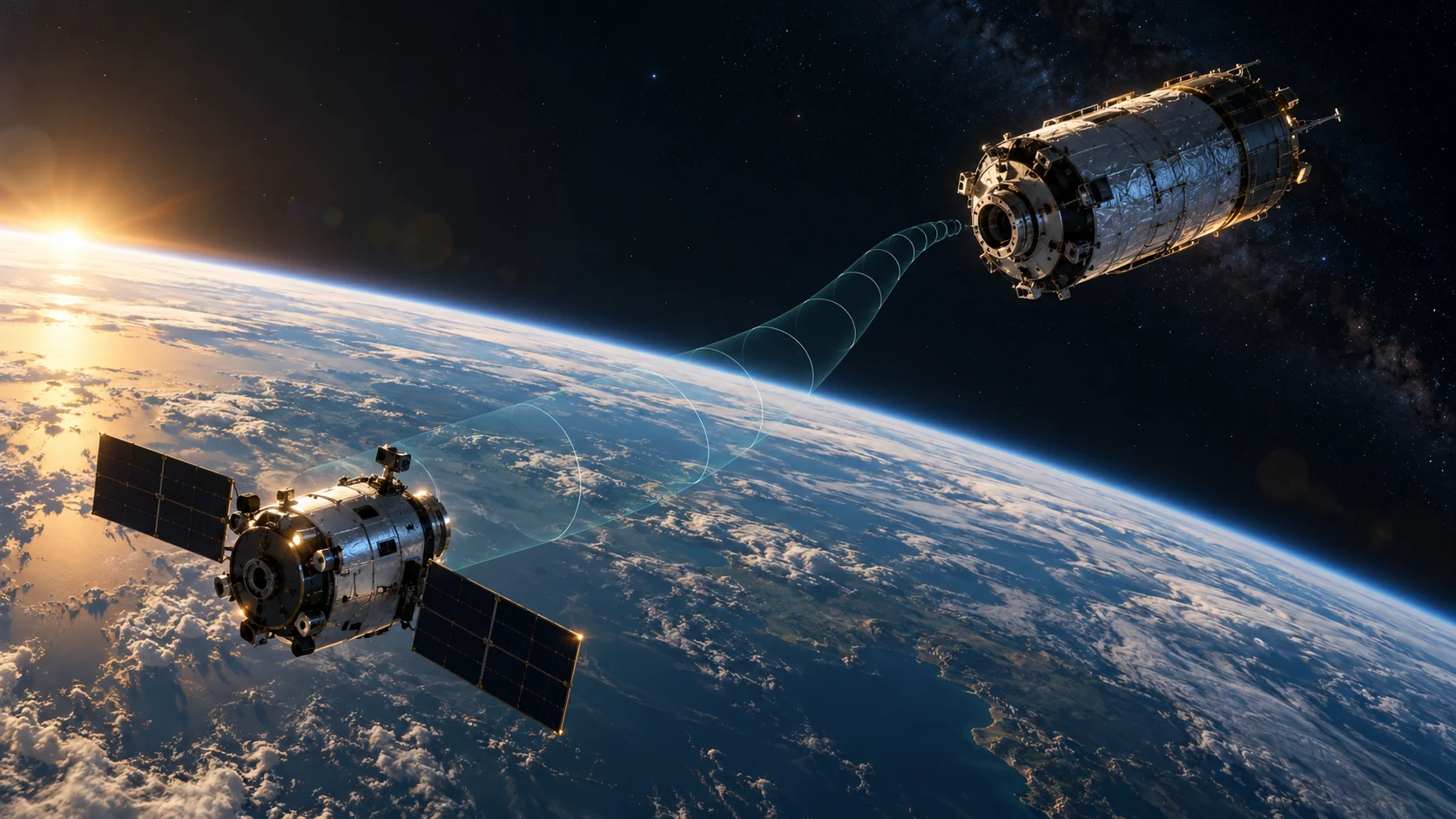
Capturing a tumbling, noncooperative object requires a chaser to rendezvous while the target motion and environmental dynamics remain uncertain. A controller must adapt without discarding the safety margins that make the approach robust.
My master's research at UCLA, carried out with Brett T. Lopez, focused on adaptive tube control for orbital rendezvous and capture.
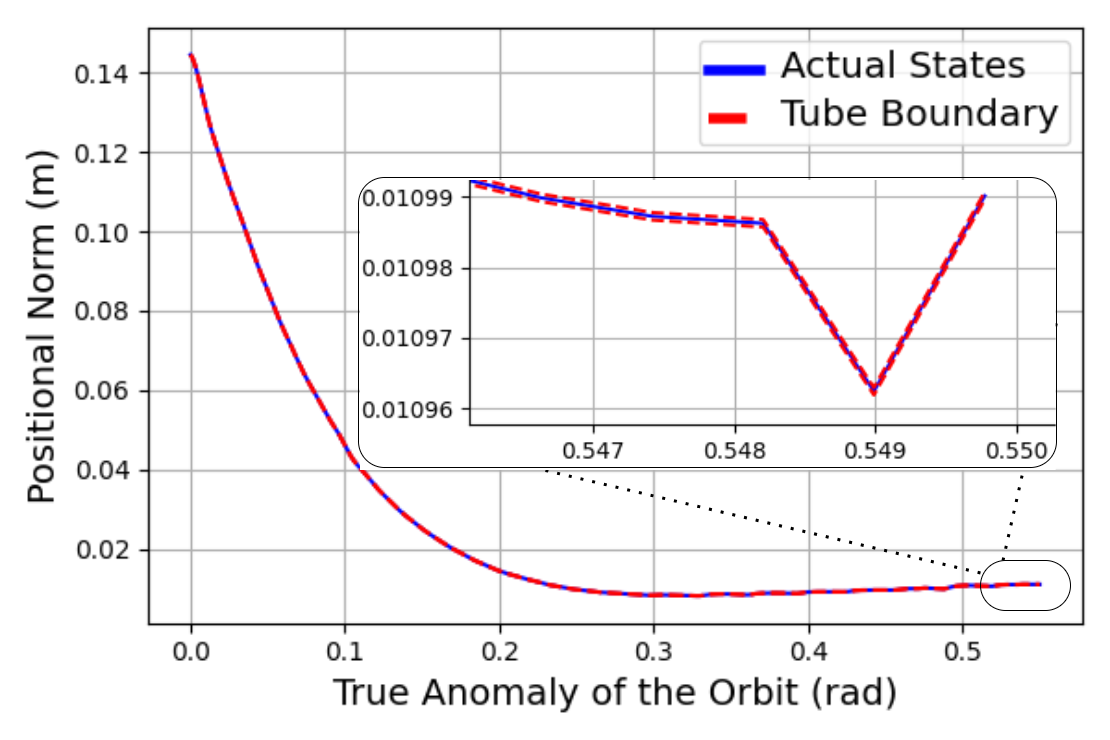
The work develops adaptive dynamic tube model predictive control around nonlinear rendezvous optimization, robust tubes, set-membership identification, and target-aware docking constraints.
The public implementation supports single- and multi-chaser missions and reports physical margins, tightened constraints, parameter estimates, target attitude, and inter-chaser spacing.
The research was published at the 2025 IEEE Aerospace Conference and is accompanied by a reproducible public simulation codebase.
Simulation is the basis of the results, with constraint margins and parameter estimates available for examining controller behavior.
Citation
Peer-reviewed conference paper · IEEE Aerospace Conference, 2025